1.) Best Containers and Equipment for Sprouts:
To be able to grow sprouts of small seeds like alfalfa seeds hygienically and sustainably, you want to avoid plastic (which can harbor bacteria in scratches and contributes to microplastics) and prioritize airflow. Alfalfa seeds are tiny and prone to mold if they sit in stagnant water.
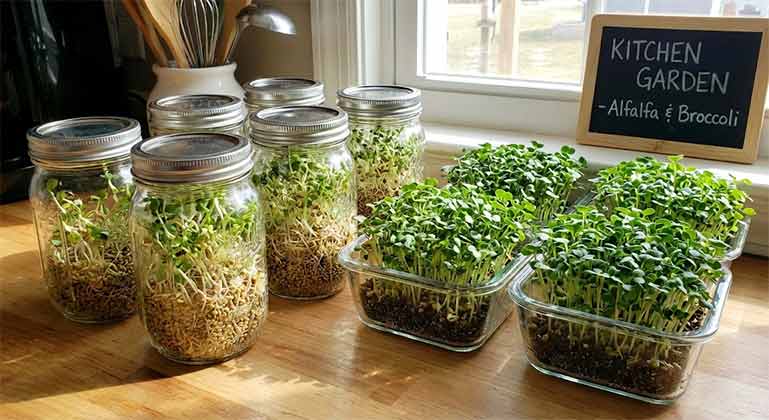
The most hygienic option and environmentally friendly is a wide-mouth glass Mason jar with a 316-grade stainless steel mesh lid.
| Feature | Benefit for small seeds like Alfalfa | Environmental Impact |
| Glass Jar | Non-porous; can be sterilized in boiling water or a dishwasher. | Infinitely recyclable and plastic-free. |
| Stainless Steel Mesh | 316-grade is “marine grade”—it won’t rust even with constant water contact. | Durable for decades; no “disposable” plastic screens. |
| Inversion Stand | Holds the jar at a 45° angle to drain water while allowing air to circulate. | Usually made of bamboo or stainless steel. |
Why avoid other containers?
Plastic Sprouters:
These often have “stackable” trays. While convenient, the plastic eventually degrades, and the many small corners in the trays are difficult to scrub perfectly clean, increasing the risk of bacterial buildup (like Salmonella or E. coli).
Clay/Terra Cotta:
While eco-friendly, they are porous. They “breathe” well, but they can trap bacteria within the clay walls, making them harder to sanitize between crops than glass.
Step-by-Step Hygienic Growing Guide for Sprouts
To ensure your alfalfa is as safe as it is bioavailable, follow these steps:
- Sanitize: Before starting, wash your glass jar and steel lid in very hot, soapy water (or the dishwasher).
- The Soak: Place 1–2 tablespoons of organic seeds in the jar. Cover with filtered water and soak for 8–12 hours.
- The Rinse (Crucial): Drain the soak water. Rinse with fresh, cool water twice a day.
- The Drain: After every rinse, place the jar upside down at an angle on a rack. Stagnant water is the enemy of hygiene. Alfalfa needs to be damp, but never “swimming.”
- The Green-up: On Day 4 or 5, move the jar into indirect sunlight. This activates the chlorophyll, turning the sprouts green and boosting their nutritional profile.
- The Final Wash: Before eating, pull the sprouts out into a bowl of cool water. Gently swish them to remove the brown seed hulls (which can taste bitter and hold moisture).
The “Safety First” Tip
Because you are growing these at home, always smell your sprouts. They should smell fresh and slightly “grassy.” If they ever smell musty or look slimy, compost them and start over.
Finding the Right Seeds
Ensure you buy seeds specifically labeled “Pathogen-free” or “For Sprouting.” Some garden-variety seeds are treated with fungicides or chemicals that are not safe for human consumption.