1.) What are the differences between Sprouts and Microgreens
Sprouts and microgreens are both tiny versions of vegetables and herbs, but they have some key differences:
Growing method:
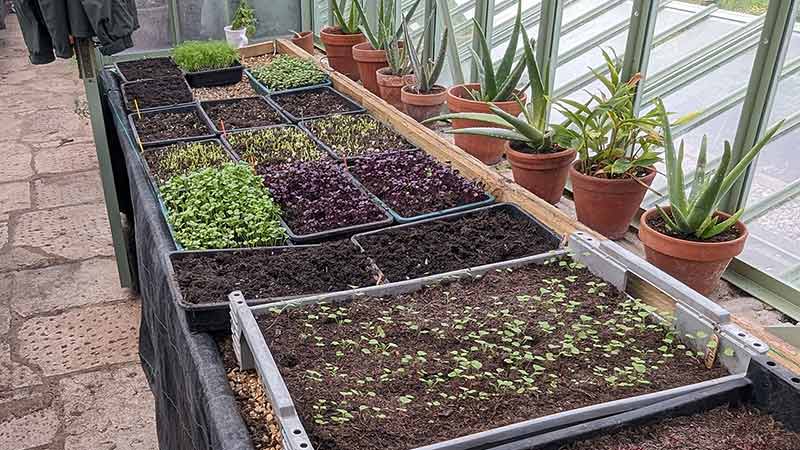
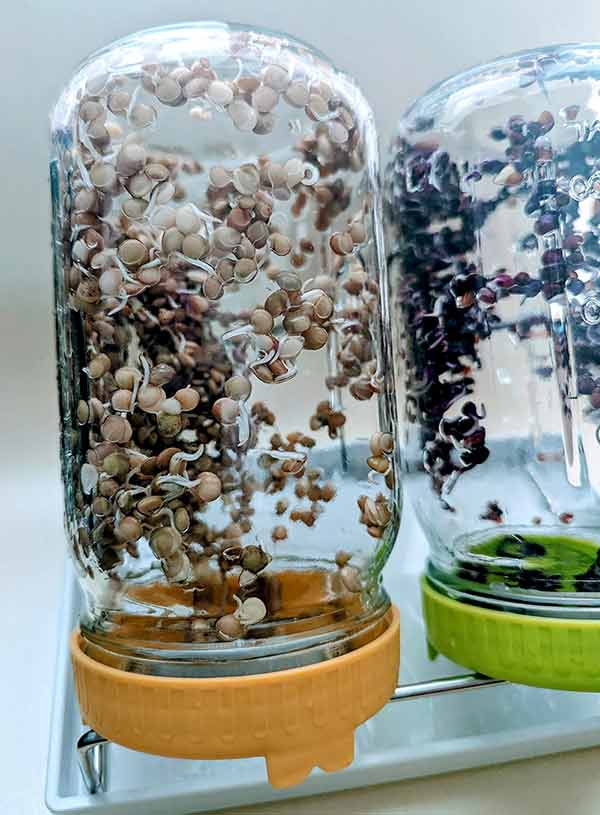
Sprouts are germinated from seeds in just water, while microgreens are grown in soil or a similar growing medium.
Harvest time:
Sprouts are super fast and can be ready in as little as 2-5 days! Microgreens take longer, typically 1-3 weeks.
What you eat:
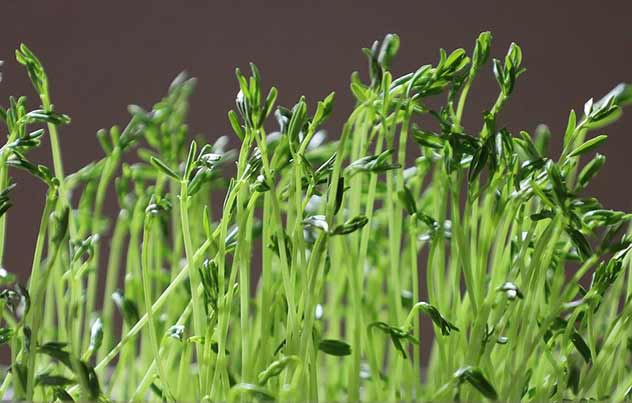
With sprouts, you eat the entire seedling, including the seed itself. With microgreens, you harvest the first true leaves and stem.
Flavor and texture:
Sprouts tend to have a milder flavor and a more delicate, crunchy texture. Microgreens pack a more concentrated punch of flavor and come in a wider variety of textures depending on the type.
Here’s a table summarizing the key differences:
2.) General Differences of Microgreens versus Sprouts
| Feature | Sprouts | Microgreens |
| Growing medium | Water | Compost or other growing medium like coir |
| Harvest time | 2-5 days | 1-3 weeks |
| What you eat | Seed and seedling | First true leaves and stem |
| Flavor | Mild | Strong |
| Texture | Delicate, crunchy | Depends on type |
Please find a Guide which seeds you can grow in what medium. I’m sure you will find your favourite ‘greens’ which will enhance your salads and dinner tables. After all good chefs use them in their culinary dishes to enhance flavour and visual impact for example the charming Chef extraordinaire Raymond Blanc employs kitchen gardeners to tend to his kitchen garden at the Le Manoir aux Quat’Saison.
Just start experimenting… It is always a delight to find out new ways to grow, sow and delight yourself, your family and friends.
Your content goes here. Edit or remove this text inline or in the module Content settings. You can also style every aspect of this content in the module Design settings and even apply custom CSS to this text in the module Advanced settings.
3.) A selection of Sprouts and Microgreens to Try
| Seed Type/ Common Names | Botanical Name | Good For |
| Mung Beans | Vigna radiata | Both |
| Chickpeas | Cicer arietinum | Both |
| Lentils | Lens culinaris | Both |
| Green Peas | Pisum sativum var. saccharatum | Both |
| Snow Peas | Pisum sativum var. macrocarpum | Both |
| Broccoli | Brassica oleracea var. italica | Both |
| Radish | Raphanus sativus | Both |
| Arugula | Eruca sativa | Both |
| Cabbage | Brassica oleracea var. capitata | Both |
| Alfalfa | Medicago sativa | Sprouting |
| Clover | Trifolium spp. | Sprouting |
| Fenugreek | Trigonella foenum-graecum | Sprouting |
| Sunflower Seeds | Helianthus annuus | Both (better for sprouts) |
| Beets | Beta vulgaris | Microgreens (sprouts can be bitter) |
| Basil | Ocimum basilicum | Microgreens |
| Sunflower Shoots | Helianthus annuus | Microgreens |
| Dill | Anethum graveolens | Microgreens |
| Cilantro | Coriandrum sativum | Microgreens |
| Parsley | Petroselinum crispum | Microgreens (weaker flavor as sprouts) |
| Kale | Brassica oleracea var. sabellica | Microgreens |
| Kohlrabi | Brassica oleracea var. gongylodes | Microgreens |
General tips:
-
For sprouting, look for sprouting seeds specifically. These are often treated to prevent bacterial growth.
-
Regardless of what you’re growing, it’s always a good idea to choose organic seeds.
-
If you’re unsure about a particular seed, try searching online to see if others have had success sprouting or growing it as microgreens. Don’t forget to investigate about successful germination rate, amounts and expiry dates of the seeds. Some seed retailers sell better quality seeds than others.
I personally have grown mung beans, lentils, alfalfa and broccoli sprouts successfully, others I’ll try soon.
Mind you there where some hickups initially, which was mainly due to not sticking to the regular ‘watering’ schedule!